
Ageing roof, no leak
Planned replacement. You control the timing, the season and the bidding, which is the cheapest position to buy from.
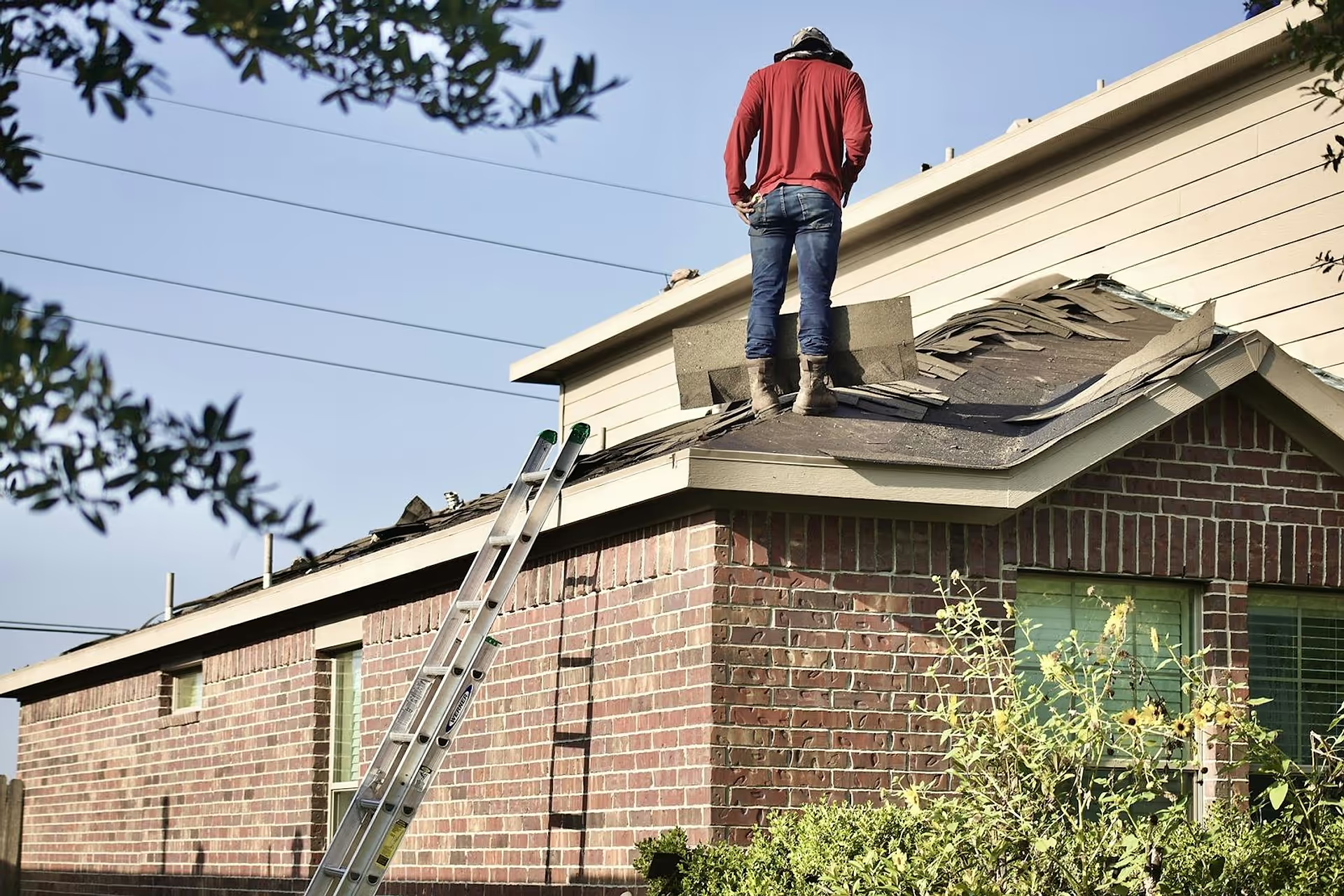
Local roofing companies
Connect with local roofing contractors serving your area. Tell us about the repair, replacement or inspection you need and compare roofing companies that can help.
Start with roofing companies that actually serve your area, not a national call centre that resells the job.
Use the same scope, the same squares and the same flashing plan so three estimates can be compared on more than price.
Tell us the project, the timeline and the property. We follow up about connecting you with relevant local professionals.
Your details are not passed to a roofing contractor unless you agree. Submitting an enquiry is not a contract.
A roof is priced per square, and what moves the number is pitch, the number of layers coming off, the state of the deck underneath and how hard the roof is to reach. A national average tells you nothing about your roof, so this site does not publish one as if it did.
Most leaks start at flashing, valleys and penetrations rather than in the open field of the covering. That is why a repair is often the right purchase while the covering still has service life left, and the wrong one when it does not. Insurance pays for sudden storm damage, not for age or wear. A contractor licence is a floor, not a measure of quality, and in several states roofing is not licensed at all.
HyreRoof is not a roofing company. We publish the research and the calculators, and where we can we introduce you to roofing professionals covering your area. We do not inspect, repair or replace roofs, and we do not guarantee anyone’s work.

An inspection is not a commitment. Getting one before a salesperson gets on your roof is how you keep the choice.
Find a RooferBefore you sign anything
The most expensive roofing decision is not which shingle to buy. It is replacing a roof that had years left, or repairing one that did not. These are the things that decide which side of that line you are on.
How it works
Four steps. You stay in control of who you talk to and whether you hire anyone.
Repair, replacement, inspection or storm damage, plus the zip code so we know which local roofing companies are relevant.
We follow up about connecting you with roofing contractors serving your area. Nothing is sent to a company unless you agree.
Ask each roofer for the same written scope: squares, tear-off, deck repair rate, flashing, ventilation and both warranties.
Pick the roofing company that matches the project, the timeline and the way you want the work run, or keep researching.
Roofing services
The covering is what you are shown. The system underneath is what keeps water out. Start with the job you need, then compare local roofing contractors on that scope.

Full tear-off, deck repairs found after the old covering comes off, underlayment, ice barrier and a new system. Ask every bidder to price the same squares and the same accessories.

Isolated leaks, lifted shingles, failed flashing and valley work. A repair that buys three years on a covering at the end of its life is usually the wrong purchase.

From the roof and from inside the attic. Ground-level photographs find missing shingles; they do not find a wet deck or failed step flashing.
Asphalt, metal, tile and synthetic each ask something different of the structure, the climate and the budget. The covering is only one line of the system.
Hail, wind and a tarp after a leak. Insurance covers sudden accidental damage, not age, and a doorstep contingency agreement is still a contract.
Balanced intake at the soffit and exhaust at the ridge. Get it wrong and you shorten the life of the covering above it and invite condensation below it.
Money
Roofing is quoted by the square (one hundred square feet of roof surface) and the number of squares is only the starting point. Two houses with identical footprints can differ by a factor of two once pitch, layers and access are counted.
Storm damage and insurance
Roofing is the one home-service category with a whole industry built around insurance claims, and it is where the pressure to sign quickly is highest. Understanding the mechanics before a storm is the cheapest protection available.

Insurance covers sudden accidental damage, not age. Granule loss from twenty years of sun is wear. A hail bruise that fractures the mat is damage.
Actual cash value pays depreciated value; replacement cost value pays to replace, usually in two instalments with the second released after completion. Which one you hold changes everything.
Many wind and hail policies carry a percentage deductible rather than a flat one. On a high-value home that can be several times a standard deductible.
After a storm, crews arrive from out of state. Some are excellent. The ones that ask you to sign a contingency agreement on the doorstep before an adjuster has seen the roof are not.
Nobody should offer to absorb, waive or “take care of” your insurance deductible. In many states that is insurance fraud, expressly prohibited by statute. The contractor commits it, but you are the one on the claim. A company willing to do that with your insurer is telling you what it will do with your roof. The same goes on the doorstep: a contingency agreement is a contract, however casually it is presented.
Insurance Information Institute, filing a homeowners claim · Checked August 12, 2026
Dated photographs of each slope, a count of hits per test square where hail is claimed, notes on soft metals such as gutters and vents, and an attic check. A written report you keep, not a phone screen you are shown on the driveway.
Find a Roofer
Choosing a professional
Roofing has a low barrier to entry and a high proportion of work that is invisible once the covering goes on. A local roofing company you can still reach in year six is usually worth more than a cheaper crew that will not be there when a valley leaks.
We publish no contractor profiles or ratings today, because we cannot yet stand behind any. The framework below is what we are assembling instead, verification that starts in state licensing records and insurer certificates, not in a company’s own description of itself.
The rows marked live are what our research covers now. A directory listing is not evidence, and we will not treat it as any.
Find a RooferExample comparison
Placeholder companies, invented values. The point is the row labels: these are the lines that have to appear on all three quotes before comparing their totals means anything.
| Criterion | Roofer A | Roofer B | Roofer C |
|---|---|---|---|
| Scope stated in squares | Yes, 28.5 | No, lump sum | Yes, 28 |
| Tear-off included | Full, 1 layer | Unstated | Full, 2 layers |
| Deck repair rate | Per sheet, quoted | Not quoted | Per sheet, quoted |
| Ice barrier | Eaves + valleys | Valleys only | Eaves + valleys |
| Flashing | All replaced | Reuse where sound | All replaced |
| Workmanship warranty | 10 years | 2 years | 25 years |
| Permit pulled by | Contractor | Homeowner | Contractor |
Example layout only. Every company and figure above is fabricated for the purpose of showing the format, and none of it rates or ranks a real roofer.
By situation
Why identical houses get different advice.
Planned replacement. You control the timing, the season and the bidding, which is the cheapest position to buy from.
Stop the water first, diagnose second. An emergency tarp is not a repair, and a repair before the source is found is a guess.
Document before anyone works. Photographs, dates and your own notes are worth more than a contractor’s enthusiasm.
Roof age drives inspection findings, insurability and negotiation. Get the age in writing rather than estimated from the kerb.
Sequence matters. Re-roofing under an existing array means paying to remove and reset it, so the covering goes first.
Approved colour and profile lists, and sometimes a review process that runs longer than the installation itself.
What lasts
Manufacturers rate a covering under laboratory conditions. What your roof actually delivers is set by the four things below, and three of them are decided by the crew rather than the product.
Under-ventilated attics cook the underside of the covering and condense moisture in winter. It is the most common reason a roof ages faster than its rating.
Nail count, placement and depth are specified by the manufacturer and are the first thing wind finds. Over-driven or high nails void warranties and fail early.
Valleys, step flashing, kick-out at wall terminations and drip edge. Water leaves through geometry, not material.
Gutters, overhanging limbs, debris in valleys and anything that holds moisture against the covering. Cheap to address, expensive to ignore.
A longer material warranty does not extend the life of a roof installed against the manufacturer’s instructions, in most cases it voids it. Ask which installation specification the quote follows.
Find a Roofer
Local roofing companies
The same covering on the same house performs differently in Tampa, Denver and Minneapolis, and the code requires different things of it in each. Local roofing companies already know the wind, hail, snow and permit rules that a national average cannot capture.
Every state is a different question
Hover or tap a state. Highlighted squares are where our first state guides are being written.
Stylised tile map, each square is a state, not a land area. State guides are in progress. Until yours exists, two authorities settle most questions: the building department for what the code demands of a roof here, and your insurer for what it will actually pay to replace.
The process
Five steps, in the order that keeps you in control of the project.
Independently where you can. Establish age, layers, deck condition and where water is actually getting in.
Weigh the repair against remaining service life. Write down which one you are buying before you take bids.
Decide covering, underlayment, ice barrier, flashing and ventilation. Hand the same scope to every bidder.
Squares, tear-off, deck rate, accessories, warranties and permit responsibility: line by line, not price to price.
Payment stages, lien waivers, weather contingency, cleanup and both warranty documents before the first bundle is loaded.
Questions
12 questions homeowners actually ask. Every answer here is the one we would give a friend, which sometimes means the answer is “it depends, and here is what it depends on.”
We read what you sent (the project type, the zip code and anything you noted) and follow up about next steps. Roofer matching is still being built, so this is not an instant quote marketplace. You should hear from us about your question and, where we can, about connecting you with roofing companies that serve your area. Your details are not sold, and no contractor receives them unless you agree.
No. Submitting the form is free and does not commit you to a roofing company, a material or a start date. You decide whether to talk to anyone and whether to hire.
It depends on the covering and, more than most homeowners expect, on the installation and the attic beneath it. Asphalt shingles are commonly rated for two to three decades, metal considerably longer, and tile or slate longer still. A covering installed over poor ventilation, or fastened outside the manufacturer’s pattern, will not reach its rating regardless of what the packaging says.
Compare the repair cost against the remaining service life you are buying. Spending meaningfully on a roof in its last few years usually buys the same problem again. Replacing a roof with a decade left because one valley leaks is an expensive way to fix flashing. Age, number of layers, deck condition and whether the damage is isolated or general are what decide it.
There is no national answer worth acting on. Roofing is priced by the square. The total is driven by area, pitch, how many layers come off, deck repairs found after tear-off, the covering and accessories, complexity such as valleys and skylights, access, and permit costs. Ask each bidder to state those lines separately, a single lump sum cannot be compared with another single lump sum.
The one your structure can carry, your climate demands and your budget supports. Asphalt is the default because it is economical and widely serviceable. Metal costs more and lasts longer. Tile and slate last longest and weigh most, which is a structural question before it is an aesthetic one. In hail country an impact rating matters more than the category; in wildfire areas the fire classification does.
The tear-off and installation on a typical single-family home is usually a matter of days, weather permitting. The longer part is what surrounds it: getting on the schedule, the permit, material lead times, and the inspection afterwards. Deck damage found after tear-off is the most common reason a job runs longer than quoted.
Insurance covers sudden accidental damage such as wind or hail, not wear or age. Whether a claim makes sense depends on your deductible and your coverage. Many policies carry a percentage wind and hail deductible rather than a flat one, and it matters whether you hold actual cash value or replacement cost. Have the roof documented before you file, and be aware that a denied claim is still a claim on your record.
Sometimes, and it is usually a false economy. Codes limit how many layers may be stacked, a layover hides the deck so nothing underneath can be inspected or repaired, it adds weight, and it typically shortens the life of the new covering. It also guarantees a full tear-off next time, at that future price.
The manufacturer warrants the material against defects; the contractor warrants the installation. They are separate documents with separate lengths, and the majority of roof problems are installation problems, which the material warranty does not cover. Enhanced system warranties exist but generally require a certified installer and full-system components, so ask whether the quote qualifies.
Not usually, but someone should be reachable. Deck damage, unexpected flashing conditions and weather decisions all come up mid-job and need an answer. Agree in advance who authorises additional work and up to what amount, in writing.
It depends on whether the roof is a deal-breaker or a negotiation item. An old roof can affect financing and insurability, which stops sales; a merely dated one usually becomes a price adjustment. A local agent and your buyer’s likely insurer will tell you more than a general rule will.
Our approach
HyreRoof is an independent resource for homeowners. We focus on the decisions inside a roofing project: condition, materials, scope, cost drivers, insurance and contractor selection. When you are ready for quotes, we connect you with roofing professionals.
Technical and code claims are sourced to model codes, trade standards bodies and building-science research, and the references are published on the page.
Anything time-sensitive carries the date it was checked. Codes and insurance practice change, and undated advice quietly becomes wrong.
Unverified is written as unverified. A roofing site with no contractor list looks incomplete; one with an invented list is worse.
We expect to be paid for introducing homeowners to roofers. That will be disclosed where it applies and it will never shape what this page says about a material, a warranty or a claim.
Every factual claim above traces to one of these. Content reviewed . How we source and correct that work is in the editorial policy.
Get quotes
Tell us about the roof and where you are. We will follow up about connecting you with roofing contractors serving your area.
Straight answer about what happens next: our roofer matching is still being built, so this is not an instant quote form. Tell us the project and the zip code. We will answer your question, and let you know when we can introduce local roofing companies in your area. Nothing is passed to a contractor unless you agree.
Keep Researching